Bion Logo
BION
DOWNLOAD
BACK_TO_ARCHIVE
JAN 15, 2025

Why Beginners Plateau in Strength Training (and How to Fix It)

TL;DR:

  • Most plateaus aren't genetic limits—they're caused by insufficient progressive overload, poor recovery, or inconsistent training
  • Beginners typically plateau after 2-6 months due to slowing neural adaptations and training errors
  • The solution: systematic progression, proper sleep (7-9 hours), adequate protein (0.7-1g/lb), and sticking with programs for 8-12 weeks

[Jump to: The Science | Common Mistakes | Plateau-Breaking Checklist | FAQ]

The Problem: Why Progress Stalls

You started strong. Those first few weeks felt magical—adding weight to the bar every session, feeling stronger, seeing changes in the mirror. Then it stopped. The weights that used to feel challenging now feel impossible. You're stuck, frustrated, and wondering if you've hit your genetic ceiling.

Here's the truth: Most plateaus aren't genetic limits. They're the result of predictable training mistakes that can be fixed.

Research shows that beginners typically experience rapid strength gains for 2-6 months, then hit their first plateau as neural adaptations slow down and training errors accumulate (Lasevicius et al., 2018).

The Science: Why Plateaus Happen

1. Neural vs. Muscular Adaptations

Early strength gains come primarily from neural adaptations—your brain and nervous system learning to recruit more muscle fibers more efficiently. These adaptations happen quickly but plateau after a few months.

Research shows that neural factors account for a large percentage of strength gains in the first 8 weeks of training, but this percentage drops as training continues and muscular adaptations become more important (PMC3780552).

What this means: Your muscles are stronger than you think, but your nervous system hasn't learned to access that strength yet.

2. The Progressive Overload Gap

The fundamental principle of strength training is progressive overload—systematically increasing the demands on your body over time. When this stops happening, progress stops.

Research on resistance training frequency has found that systematic progression in training load is critical for continued strength gains (Grgic et al., 2018). Without progressive overload, even perfect technique and nutrition won't produce results.

The problem: Most beginners either:

  • Don't track their workouts consistently
  • Add weight too quickly (causing failure)
  • Add weight too slowly (no challenge)
  • Never progress beyond the same weights

3. Recovery Debt Accumulation

Your body adapts to training during recovery, not during the workout. When recovery is insufficient, fatigue accumulates faster than adaptations can occur.

Research has found that sleep deprivation significantly reduces strength performance and impairs recovery processes critical for adaptation (Dattilo et al., 2011).

The recovery equation: Training creates stress → Recovery allows adaptation → Adaptation enables progression → Progression requires more stress

When any part of this cycle breaks down, plateaus occur.

Common Plateau-Causing Mistakes

Mistake 1: No Systematic Progression

The problem: Lifting the same weights for weeks or months without a clear plan to increase load, reps, or sets.

Research shows: Systematic progression strategies significantly increase strength gains compared to random or no progression (PMC11170668).

The fix: Use a rep-range system (e.g., 6-10 reps). When you hit the top of the range on all sets, add weight and restart at the bottom.

Mistake 2: Training Too Close to Failure

The problem: Going to failure on most sets, thinking this maximizes gains.

Research shows: Training to failure on every set can increase injury risk and impair recovery without providing additional strength benefits for most lifters (PMC3780552).

The fix: Stop most sets at 1-3 reps in reserve (RIR). Save failure for occasional accessory exercises only.

Mistake 3: Insufficient Sleep

The problem: Getting less than 7 hours of sleep regularly.

Research shows: Sleep restriction reduces muscle protein synthesis and increases cortisol levels, impairing recovery and adaptation processes essential for strength gains (PMC11170668).

The fix: Prioritize 7-9 hours of sleep nightly. Consider this as important as your training sessions.

Mistake 4: Inadequate Protein Intake

The problem: Not consuming enough protein to support muscle repair and growth.

Research shows: Protein intakes of 1.6-2.2g per kg bodyweight (approximately 0.7-1.0g per pound) optimize muscle protein synthesis in trained individuals (PMC7068252).

The fix: Aim for 0.7-1.0g of protein per pound of bodyweight daily, spread across 3-4 meals.

Mistake 5: Program Hopping

The problem: Changing programs every few weeks when progress slows.

Research shows: Program consistency for 8-12 weeks is necessary for optimal training adaptations to occur and for assessing true program effectiveness (PMC11170668).

The fix: Stick with a well-designed program for at least 8-12 weeks before making changes.

Mistake 6: Ignoring Technique Deterioration

The problem: Allowing form to break down as weights increase.

Research shows: Poor technique reduces training effectiveness and increases injury risk, creating a downward spiral of decreased training capacity and compromised results.

The fix: Film your lifts periodically and prioritize technique over weight progression.

The Plateau-Breaking Checklist

Use this systematic approach to break through any plateau:

Week 1-2: Assessment Phase

□ Track everything for 2 weeks

  • Record all sets, reps, and weights
  • Note sleep duration and quality
  • Track protein intake
  • Monitor energy levels and motivation

□ Identify the limiting factor

  • Is progression happening? (Weight/reps not increasing)
  • Is recovery adequate? (Poor sleep, low energy, persistent soreness)
  • Is nutrition sufficient? (Protein intake, overall calories)
  • Is technique deteriorating? (Form breakdown, joint pain)

Week 3-4: Intervention Phase

□ Fix the biggest issue first

  • If no progression: Implement systematic overload
  • If poor recovery: Improve sleep and reduce training volume
  • If poor nutrition: Increase protein and overall calories
  • If poor technique: Reduce weight and focus on form

□ Add one improvement at a time

  • Don't try to fix everything simultaneously
  • Focus on the factor with the biggest impact
  • Give changes 2-4 weeks to show results

Week 5-8: Optimization Phase

□ Fine-tune your approach

  • Adjust progression based on what's working
  • Optimize recovery strategies
  • Refine nutrition timing and amounts
  • Perfect technique on key lifts

□ Consider a deload week

  • Reduce training load by 10-20% for one week
  • Focus on technique and mobility
  • Return to normal training refreshed

Advanced Plateau-Breaking Strategies

1. Micro-Loading

When standard 5-pound jumps become too large, use smaller increments:

  • Upper body: 1.25-2.5 pound increases
  • Lower body: 2.5-5 pound increases
  • Use fractional plates or micro-loading devices

2. Cluster Training

Break a heavy set into smaller clusters with short rest:

  • Traditional: 1×8 reps at 85% 1RM
  • Cluster: 4×2 reps at 85% 1RM with 15-30 seconds between clusters
  • Benefits: Maintains technique while increasing total volume

3. Tempo Manipulation

Vary lifting speeds to increase time under tension:

  • Eccentric emphasis: 3-4 second lowering phase
  • Isometric holds: Pause at the bottom of squats or bench press
  • Benefits: Increases muscle activation and time under tension

4. Frequency Manipulation

Increase training frequency for stalled lifts:

  • Current: Bench press 2×/week
  • Modified: Bench press 3×/week with lighter loads
  • Benefits: More practice and neural adaptation opportunities

How Bion Handles Plateaus Automatically

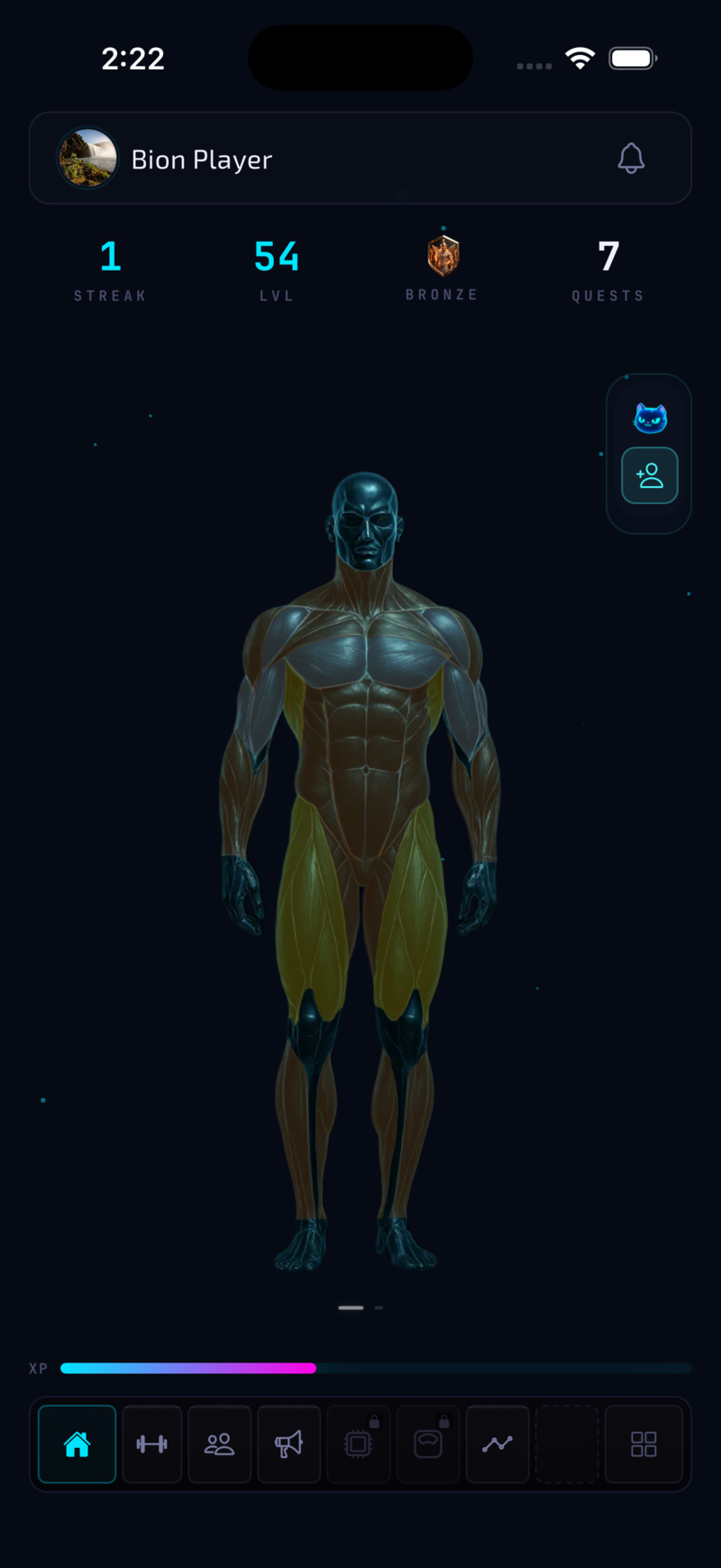
Bion's AI addresses plateau-causing mistakes before they become problems:

Smart Progression Tracking

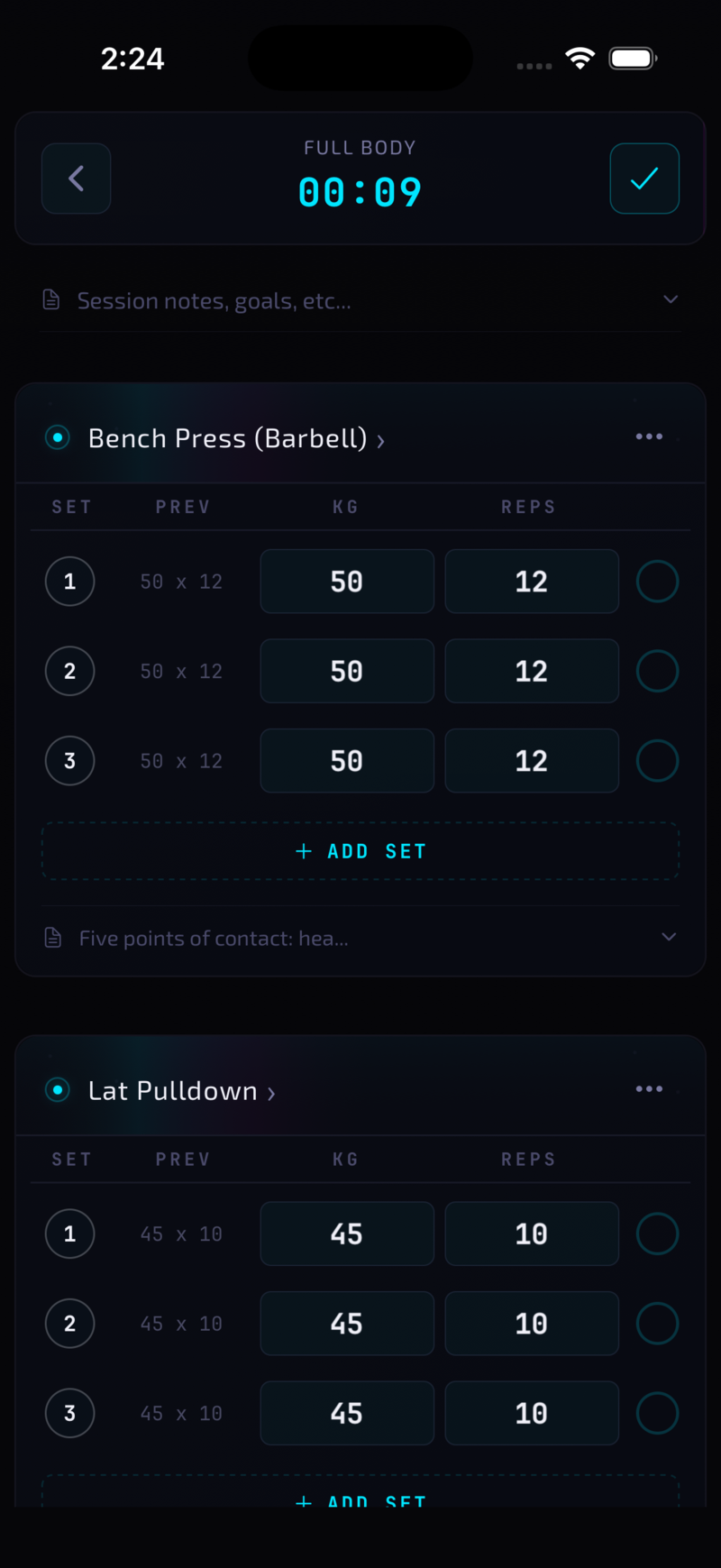
  • Monitors your performance trends and suggests when to increase weight or reps
  • Uses estimated 1RM calculations to track true strength over time
  • Identifies when you're ready for progression vs. when you need to hold steady

Recovery-Aware Programming

  • Tracks your sleep, energy levels, and workout readiness
  • Automatically suggests deload weeks when fatigue accumulates
  • Adjusts training intensity based on your recovery status

Technique Guidance

  • Provides form cues and exercise substitutions to maintain quality
  • Suggests alternative exercises when technique deteriorates
  • Tracks exercise-specific progress to identify problem areas

Consistent Program Structure

  • Keeps you on track with proven training principles
  • Prevents program hopping by providing long-term progression
  • Adapts the program to your schedule and equipment without changing core principles

Sample Plateau-Breaking Workout

Here's a 4-week program specifically designed to break through plateaus:

Week 1: Assessment & Reset

  • Monday: Bench Press 3×6-8, Row 3×6-8, Accessories
  • Wednesday: Squat 3×6-8, RDL 3×6-8, Accessories
  • Friday: OHP 3×6-8, Pull-ups 3×6-8, Accessories

Week 2: Micro-Loading

  • Add 2.5 pounds to upper body, 5 pounds to lower body
  • Focus on hitting top of rep ranges with perfect form

Week 3: Volume Increase

  • Add one set to main lifts (4×6-8 instead of 3×6-8)
  • Maintain same weights as Week 2

Week 4: Intensity Peak

  • Attempt to hit new rep PRs on final set of each exercise
  • If successful, increase weights for next cycle

Related Reading

FREQUENTLY_ASKED_QUESTIONS
Most beginners hit their first plateau after 2-6 months of consistent training. This is normal and expected as the initial rapid neural adaptations slow down.

Get Started with Bion

Stop guessing why your progress stalled. Download Bion and get systematic progression, recovery tracking, and technique guidance that prevents plateaus before they happen.

SYSTEM_UPGRADE_AVAILABLE

Ready to Upgrade Your Training?

Join thousands of lifters using Bion to track, analyze, and optimize their strength journey with AI-powered insights.

10K+
Active Users
AI
Powered
FREE
Forever
Download on the App StoreGet it on Google Play
INSTANT_DOWNLOAD

Or start with our free tools: