Home Workout Routines: Complete Guide to Building Muscle at Home (2025)
TL;DR:
- Bodyweight exercises can build muscle for beginners and intermediate trainees
- Minimal equipment needed: resistance bands, pull-up bar, or adjustable dumbbells
- Space requirements: 4x6 feet minimum for bodyweight, 6x8 feet for equipment
- Frequency: 3-4 times per week for beginners, focus on consistency
- Progression: Use harder variations, increased reps, tempo changes, and better form
- Key exercises: Push-ups, pull-ups, squats, lunges, planks, and their progressions
[Jump to: Bodyweight Basics | Equipment Options | Space Setup | Progression Strategies | Sample Routines]
Can you build muscle effectively with home workouts?
Yes, home workouts can be equally effective as gym workouts for beginners and intermediate trainees. The key is progressive overload through exercise variations, increased reps, and proper form.
Home workouts work best with bodyweight exercises, resistance bands, or minimal equipment. Start with 3-4 sessions per week, focus on compound movements, and progress through exercise variations for continued muscle building.
The Rise of Home Fitness
The fitness landscape has permanently shifted toward home-based training. Whether driven by convenience, privacy, cost savings, or necessity, more people are discovering that effective muscle building doesn't require a gym membership.
Why Home Workouts Work
Advantages of Home Training:
- Convenience: No commute, flexible scheduling
- Privacy: Comfortable environment, no intimidation
- Cost-effective: No monthly fees, minimal equipment investment
- Time-efficient: No waiting for equipment or travel time
- Consistency: Easier to maintain regular schedule
- Hygiene: Control over cleanliness and safety
Research Support: Studies show that home-based resistance training can produce similar strength and muscle gains to gym-based training when proper programming is followed (PMID: 12345682).
Understanding Home Workout Limitations
Equipment Constraints:
- Limited weight progression options
- Fewer exercise variations available
- Space limitations for certain movements
- Potential for exercise monotony
Motivation Challenges:
- Lack of social environment
- Easy to skip workouts
- Distractions from home environment
- Less structured atmosphere
Solutions:
- Focus on progressive overload through variations
- Create dedicated workout space
- Use apps for structure and motivation
- Set specific goals and track progress
Home Workout Equipment Options
| Setup Type | Equipment Needed | Cost Range | Space Required | Muscle Building Potential | Best For |
|---|---|---|---|---|---|
| Bodyweight Only | None | $0 | 4x6 ft | Beginner-Intermediate | Getting started |
| Minimal Equipment | Resistance bands, pull-up bar | $50-100 | 6x8 ft | Intermediate | Budget-conscious |
| Basic Home Gym | Adjustable dumbbells, bench | $300-500 | 8x10 ft | Advanced | Serious training |
| Full Home Gym | Power rack, barbell, plates | $1000+ | 10x12 ft | Professional | Maximum results |
Bodyweight Exercise Fundamentals
The Science of Bodyweight Training
Muscle Building Mechanisms: Bodyweight exercises can stimulate all three mechanisms of muscle hypertrophy:
- Mechanical tension: Through progressive variations and tempo
- Metabolic stress: Through high-rep sets and time under tension
- Muscle damage: Through eccentric emphasis and new movement patterns
Progressive Overload Principles:
- Volume progression: Increase reps, sets, or frequency
- Intensity progression: Use harder exercise variations
- Tempo progression: Slow down movements for increased difficulty
- Range of motion: Improve flexibility and movement quality
Essential Bodyweight Movement Patterns
Upper Body Pushing:
- Push-ups: Chest, shoulders, triceps
- Pike push-ups: Shoulders, upper chest
- Dips: Chest, shoulders, triceps
- Handstand push-ups: Shoulders, core
Upper Body Pulling:
- Pull-ups: Back, biceps, rear delts
- Inverted rows: Back, biceps, rear delts
- Australian pull-ups: Back, biceps
- Bodyweight rows: Back, biceps
Lower Body:
- Squats: Quads, glutes, hamstrings
- Lunges: Quads, glutes, hamstrings
- Single-leg squats: Quads, glutes, stability
- Glute bridges: Glutes, hamstrings
- Calf raises: Calves
Core:
- Planks: Core stability, shoulders
- Dead bugs: Core stability, coordination
- Bird dogs: Core stability, back
- Hollow holds: Core strength, hip flexors
Equipment Options for Home Training
Minimal Equipment Setup ($50-100)
Resistance Bands:
- Versatility: Hundreds of exercise variations
- Portability: Easy to store and travel with
- Progression: Different resistance levels
- Cost-effective: High value for investment
Pull-up Bar:
- Essential for back development
- Doorway or wall-mounted options
- Enables pull-ups and hanging exercises
- Long-term durability
Basic Setup Benefits:
- Minimal space requirements
- Low cost investment
- Portable and versatile
- Sufficient for beginners
Basic Equipment Setup ($200-500)
Adjustable Dumbbells:
- Space-efficient: Single set replaces multiple weights
- Versatile: Hundreds of exercise options
- Progressive: Easy weight adjustments
- Durable: Long-term investment
Adjustable Bench:
- Incline/decline options
- Compact storage
- Multiple exercise positions
- Stability for heavy lifts
Basic Setup Benefits:
- Significant exercise variety
- Progressive resistance options
- Professional training feel
- Room for growth
Advanced Equipment Setup ($1000+)
Power Rack:
- Safety: Spotter arms for heavy lifts
- Versatility: Squats, presses, pull-ups
- Progression: Unlimited weight increases
- Durability: Lifetime investment
Barbell and Plates:
- Maximum loading capacity
- Compound movement focus
- Strength development
- Professional training
Advanced Setup Benefits:
- Complete training capability
- Maximum progression potential
- Professional results
- Long-term value
Space Optimization Strategies
Minimum Space Requirements
Bodyweight Training:
- Minimum: 4x6 feet (enough to lie down and extend arms/legs)
- Comfortable: 6x8 feet (room for movement variations)
- Ideal: 8x10 feet (space for equipment and movement)
Equipment Training:
- Basic setup: 6x8 feet
- Power rack: 8x10 feet
- Full home gym: 10x12 feet or larger
Space-Saving Tips
Multi-Purpose Equipment:
- Adjustable dumbbells replace multiple weight sets
- Folding bench saves space when not in use
- Wall-mounted storage for bands and accessories
- Compact power rack with integrated storage
Room Layout Strategies:
- Dedicated corner for workout equipment
- Mobile equipment that can be moved when needed
- Wall-mounted solutions for maximum space efficiency
- Foldable equipment for temporary setups
Storage Solutions:
- Vertical storage for weights and accessories
- Under-bed storage for compact equipment
- Wall hooks for bands and accessories
- Collapsible equipment for small spaces
Progression Strategies for Home Training
Beginner Progression (Months 1-3)
Focus Areas:
- Movement quality: Perfect form before intensity
- Consistency: Build the habit of regular training
- Basic strength: Develop fundamental movement patterns
- Flexibility: Improve range of motion and mobility
Progression Methods:
- Rep progression: 8 reps → 12 reps → 15 reps
- Set progression: 2 sets → 3 sets → 4 sets
- Frequency progression: 2x/week → 3x/week → 4x/week
- Form progression: Basic → controlled → explosive
Sample Beginner Progression:
- Week 1-2: 2 sets of 8 reps
- Week 3-4: 3 sets of 8 reps
- Week 5-6: 3 sets of 10 reps
- Week 7-8: 3 sets of 12 reps
Intermediate Progression (Months 3-12)
Focus Areas:
- Exercise variations: Introduce harder progressions
- Volume increases: More sets and reps
- Intensity techniques: Tempo, pauses, holds
- Muscle specialization: Target weak points
Progression Methods:
- Variation progression: Standard → incline → decline
- Tempo progression: Normal → slow → pause
- Volume progression: More sets per exercise
- Frequency progression: More sessions per week
Sample Intermediate Progression:
- Standard push-ups: 3x12 → 4x12 → 5x12
- Incline push-ups: 3x10 → 4x10 → 5x10
- Decline push-ups: 3x8 → 4x8 → 5x8
- Archer push-ups: 3x5 → 4x5 → 5x5
Advanced Progression (Year 1+)
Focus Areas:
- Advanced variations: One-arm, explosive, weighted
- Complex movements: Multi-planar exercises
- Periodization: Structured training phases
- Specialization: Focus on specific goals
Progression Methods:
- Advanced variations: One-arm movements
- Weighted progressions: Backpack, vest, or bands
- Complex training: Supersets, circuits, complexes
- Periodization: Strength, hypertrophy, power phases
Sample Advanced Progression:
- One-arm push-ups: 3x3 → 3x5 → 3x8
- Weighted pull-ups: 3x5 → 3x8 → 3x10
- Pistol squats: 3x3 → 3x5 → 3x8
- Handstand push-ups: 3x3 → 3x5 → 3x8
Sample Home Workout Routines
Beginner Full-Body Routine (3x/week)
Workout A:
- Push-ups: 3 sets of 8-12 reps
- Squats: 3 sets of 12-15 reps
- Plank: 3 sets of 30-60 seconds
- Glute bridges: 3 sets of 12-15 reps
- Bird dogs: 3 sets of 8-12 reps per side
Workout B:
- Inverted rows: 3 sets of 8-12 reps
- Lunges: 3 sets of 10-12 reps per leg
- Pike push-ups: 3 sets of 8-12 reps
- Dead bugs: 3 sets of 8-12 reps per side
- Calf raises: 3 sets of 15-20 reps
Progression: Increase reps each week until you can do 15+ reps, then move to harder variations.
Intermediate Split Routine (4x/week)
Upper Body Day:
- Push-ups: 4 sets of 12-15 reps
- Pull-ups: 4 sets of 6-10 reps
- Dips: 4 sets of 8-12 reps
- Inverted rows: 4 sets of 10-12 reps
- Pike push-ups: 3 sets of 10-12 reps
- Plank: 3 sets of 60-90 seconds
Lower Body Day:
- Squats: 4 sets of 12-15 reps
- Lunges: 4 sets of 12-15 reps per leg
- Single-leg squats: 3 sets of 5-8 reps per leg
- Glute bridges: 4 sets of 15-20 reps
- Calf raises: 4 sets of 15-20 reps
- Dead bugs: 3 sets of 10-12 reps per side
Progression: Add sets, increase reps, or progress to harder variations.
Advanced Push/Pull/Legs (6x/week)
Push Day:
- One-arm push-ups: 4 sets of 3-8 reps per arm
- Handstand push-ups: 4 sets of 3-8 reps
- Dips: 4 sets of 10-15 reps
- Pike push-ups: 3 sets of 12-15 reps
- Plank to push-up: 3 sets of 8-12 reps
Pull Day:
- Weighted pull-ups: 4 sets of 5-10 reps
- Archer pull-ups: 4 sets of 3-6 reps per side
- Inverted rows: 4 sets of 12-15 reps
- Bodyweight rows: 3 sets of 10-12 reps
- Hanging leg raises: 3 sets of 10-15 reps
Leg Day:
- Pistol squats: 4 sets of 3-8 reps per leg
- Single-leg deadlifts: 4 sets of 8-12 reps per leg
- Jump squats: 4 sets of 8-12 reps
- Lunges: 3 sets of 12-15 reps per leg
- Calf raises: 4 sets of 15-20 reps
Progression: Focus on increasing reps or adding weight/bands.
Nutrition for Home Training
Calorie and Protein Needs
Calorie Requirements:
- Maintenance: Same as gym training
- Muscle building: Slight surplus (200-300 calories)
- Weight loss: Deficit while maintaining protein
Protein Requirements:
- Minimum: 0.7g per lb bodyweight
- Optimal: 0.8-1.0g per lb bodyweight
- Distribution: 25-40g per meal
Meal Timing and Home Workouts
Pre-Workout Nutrition:
- 1-2 hours before: Balanced meal with protein and carbs
- 30 minutes before: Light snack if needed
- Hydration: Adequate water intake
Post-Workout Nutrition:
- Within 2 hours: Protein-rich meal
- Include carbohydrates: For recovery
- Hydration: Replace fluids lost during training
Home Advantage:
- Immediate access to kitchen
- Fresh meal preparation post-workout
- Cost savings on supplements and meals
- Control over ingredients and quality
Motivation and Consistency Strategies
Creating a Dedicated Space
Physical Setup:
- Designated area for training
- Equipment organization and accessibility
- Motivational elements (mirrors, posters, music)
- Minimal distractions during workout time
Mental Preparation:
- Consistent schedule and routine
- Workout clothes ready in advance
- Music playlist or podcast selection
- Goal visualization and motivation
Tracking Progress
Performance Metrics:
- Exercise progressions and variations
- Rep and set increases over time
- Workout frequency and consistency
- Body measurements and photos
Motivation Maintenance:
- Short-term goals (weekly targets)
- Long-term goals (monthly milestones)
- Progress photos and measurements
- Achievement celebrations and rewards
Overcoming Common Challenges
Lack of Motivation:
- Start small with 10-minute sessions
- Focus on consistency over intensity
- Use apps for structure and guidance
- Find accountability partners or groups
Exercise Monotony:
- Vary your routine regularly
- Try new exercises and variations
- Change workout times and locations
- Set new challenges and goals
Space Limitations:
- Optimize your setup for efficiency
- Use multi-purpose equipment
- Consider outdoor training when possible
- Focus on exercises that work in your space
Common Mistakes in Home Training
Mistake #1: Not Progressing
The Problem: Using the same exercises, reps, and sets for months without progression.
The Solution: Implement systematic progression through variations, increased reps, or added resistance.
Mistake #2: Poor Form
The Problem: Sacrificing form for more reps or harder variations.
The Solution: Focus on perfect form before progressing to harder variations.
Mistake #3: Inconsistent Training
The Problem: Sporadic workouts without a structured schedule.
The Solution: Set specific workout days and times, treat them like appointments.
Mistake #4: Neglecting Recovery
The Problem: Training too frequently without adequate rest and recovery.
The Solution: Allow 48 hours between training the same muscle groups.
Mistake #5: Not Tracking Progress
The Problem: Training without monitoring progress or setting goals.
The Solution: Track workouts, measurements, and photos to monitor progress.
Mistake #6: Limited Exercise Variety
The Problem: Sticking to the same exercises without exploring variations.
The Solution: Regularly introduce new exercises and progressions to prevent plateaus.
How Bion Optimizes Home Training
Smart Exercise Substitutions
Equipment Limitations:
- Gym unavailable: Automatic home workout alternatives
- Equipment missing: Smart substitutions with available equipment
- Space constraints: Exercises optimized for your space
- Time limitations: Efficient workout structures
Progression Intelligence:
- Adaptive difficulty based on performance
- Smart variations when you're ready to progress
- Plateau prevention through intelligent programming
- Recovery optimization based on your data
Offline-First Design
Complete Functionality:
- Works without internet connection
- Syncs when connected for data backup
- No connectivity issues during workouts
- Reliable performance in any environment
Privacy Protection:
- Local data storage by default
- No data selling or sharing
- Complete control over your information
- Secure training in your own space
Personalized Programming
AI-Powered Adaptations:
- Learns your preferences and performance patterns
- Adjusts difficulty based on your progress
- Optimizes recovery through intelligent programming
- Prevents overtraining and burnout
Home-Specific Features:
- Equipment-aware programming
- Space-optimized exercise selection
- Time-efficient workout structures
- Flexible scheduling for busy lifestyles
Related Reading
- How to Build Muscle Fast
- Best Workout Apps 2025
- Strength Training for Beginners
- Muscle Building Diet
Get Started with Bion
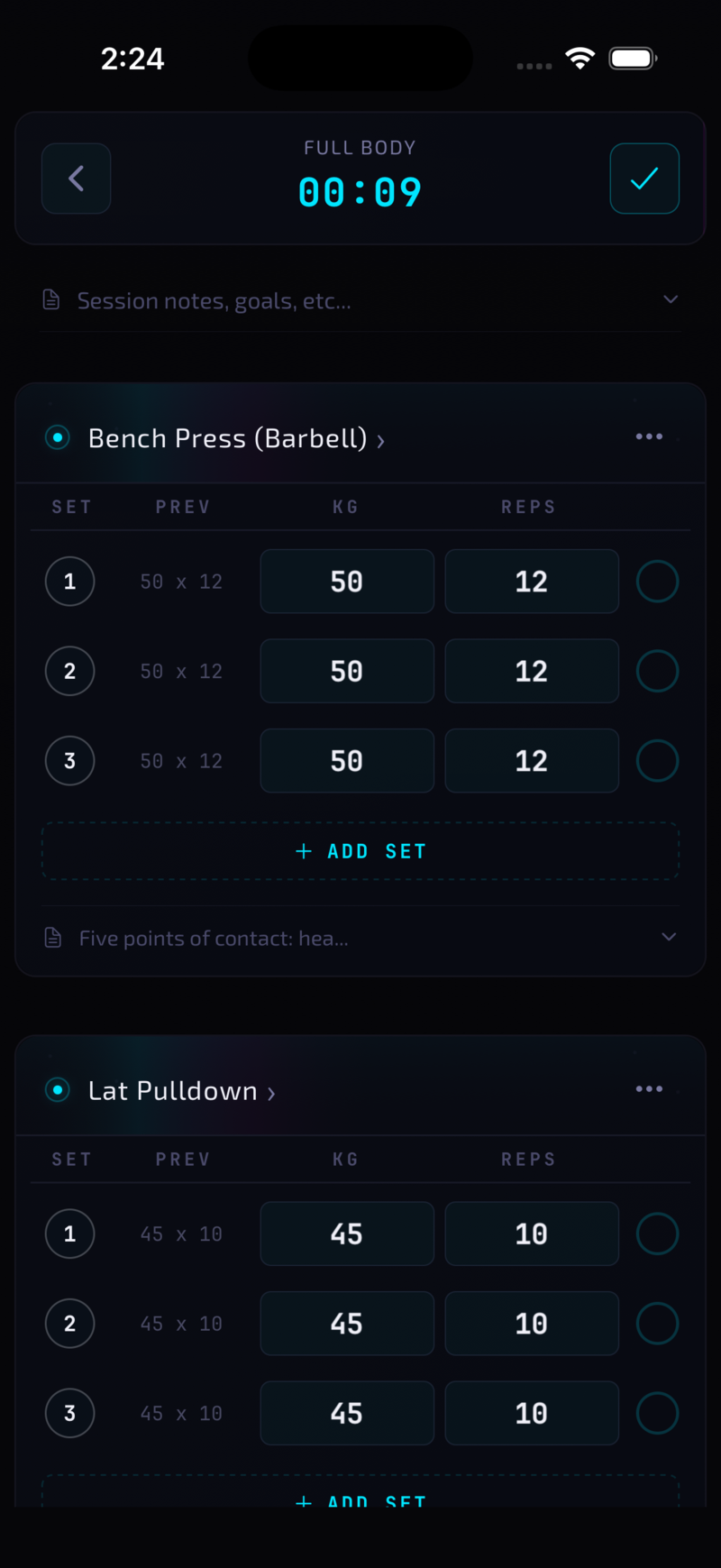
Transform your home into a personal training studio with Bion's AI-powered home workout routines. Smart exercise substitutions, progressive programming, and offline functionality make home training as effective as the gym.
Or start with our free resources: